In this article, you’ll find some of the most interesting statistics from Belgium’s youth national teams during the 2025/26 season.
The past campaign was another successful one for Belgian youth football. The highlight of the season was undoubtedly the UEFA U17 EURO final between Belgium and Italy. Although the Young Red Devils ultimately fell short on penalties, reaching the final was a testament to the work being done throughout the country’s academies.
More importantly, this achievement confirms a trend that has emerged over the last two years. The 2008 generation qualified for both the UEFA U17 EURO and the FIFA U17 World Cup, and the 2009 generation repeated the feat this season before going all the way to the European final.
Belgium’s youth national teams continue to compete with Europe’s best, and the performances of these recent generations suggest that the country’s development pathway remains in excellent health.
Hard Teams to Beat
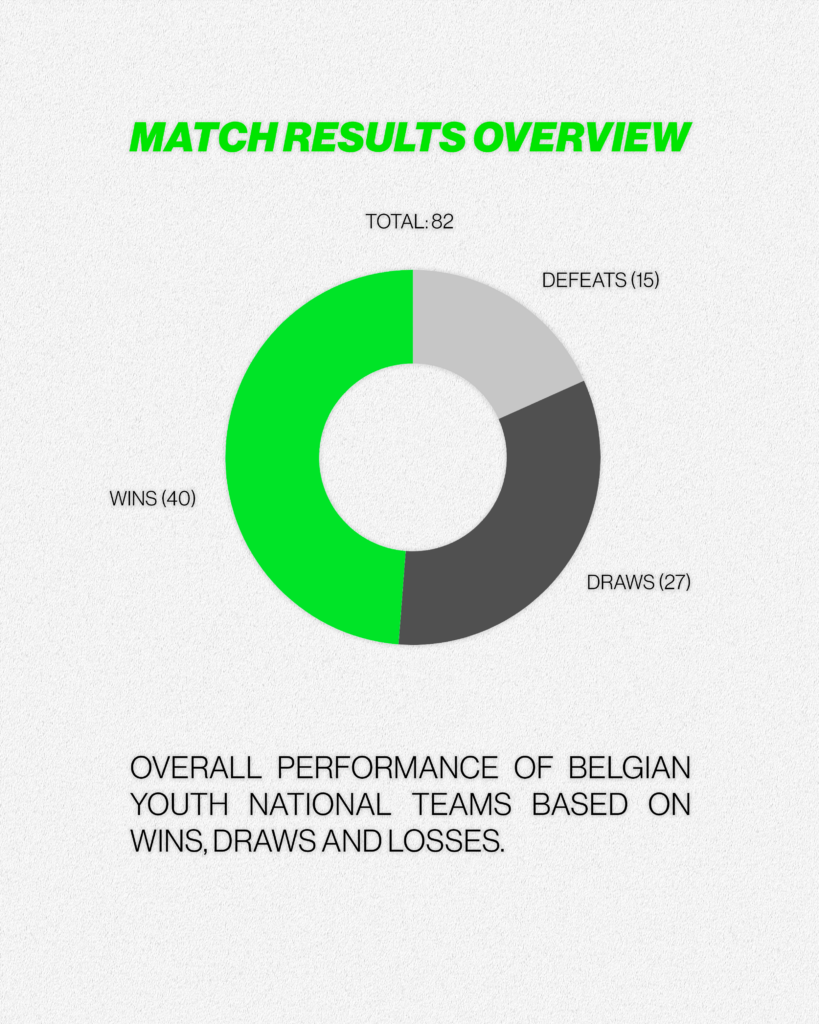
Belgium’s youth national teams played a total of 82 matches during the 2025/26 season, winning 40 of them while suffering just 15 defeats.
These figures highlight one of the defining characteristics of Belgian youth teams in recent years: they are difficult to beat. Across all age groups, Belgium lost fewer than one match in five and won almost one in every two games played.
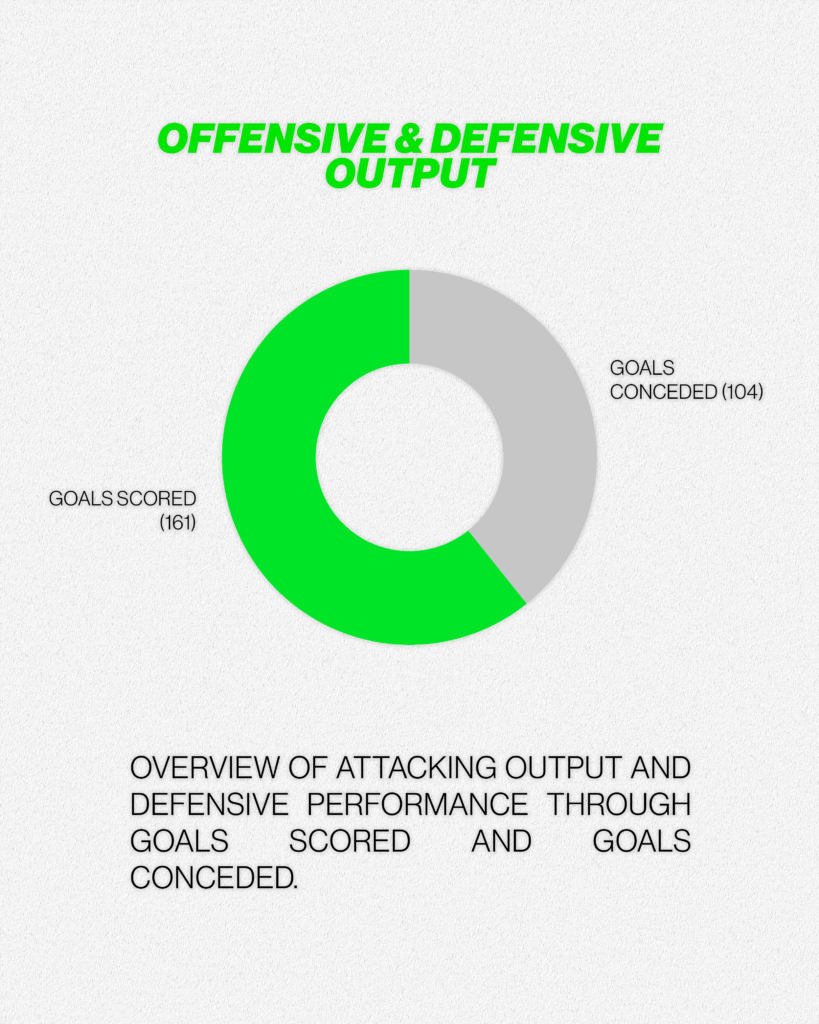
The goalscoring statistics tell a similar story. Belgian youth sides scored 161 goals while conceding 104, meaning they found the net approximately 55% more often than their opponents. Whether through attacking quality or collective organization, Belgium’s young internationals consistently managed to outscore the teams they faced throughout the campaign.
(You can find the top scorers of the season by clicking here.)
Relative Age Effect and Squad Sizes
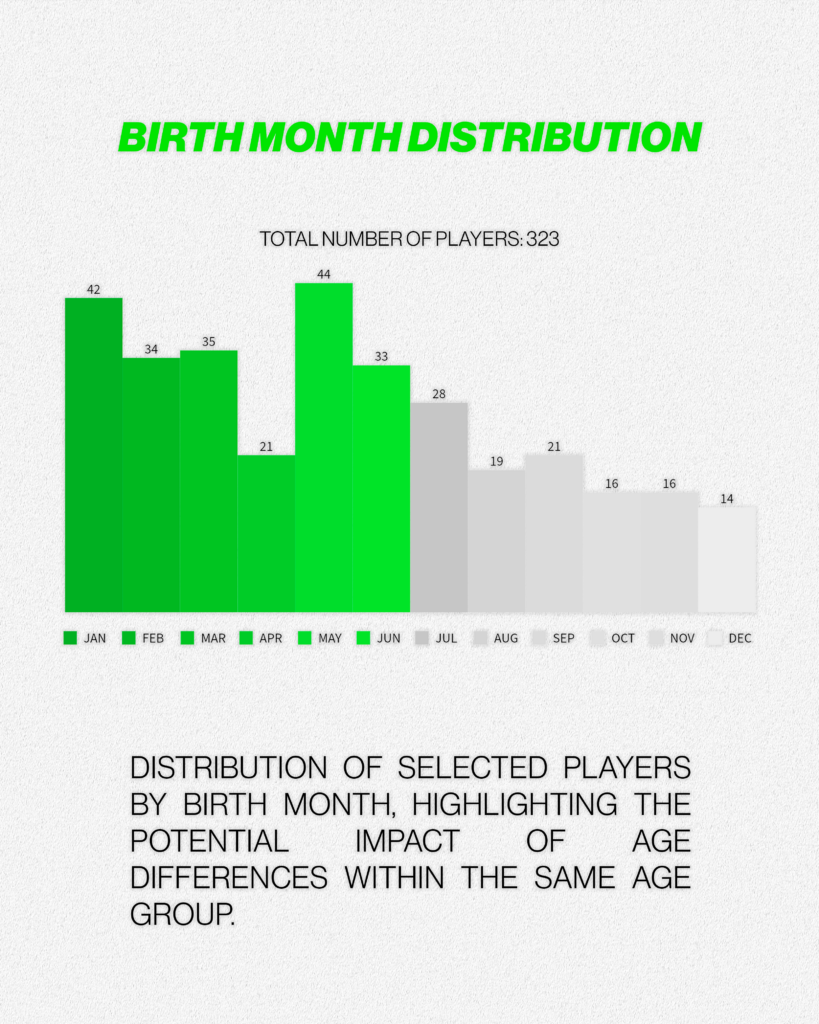
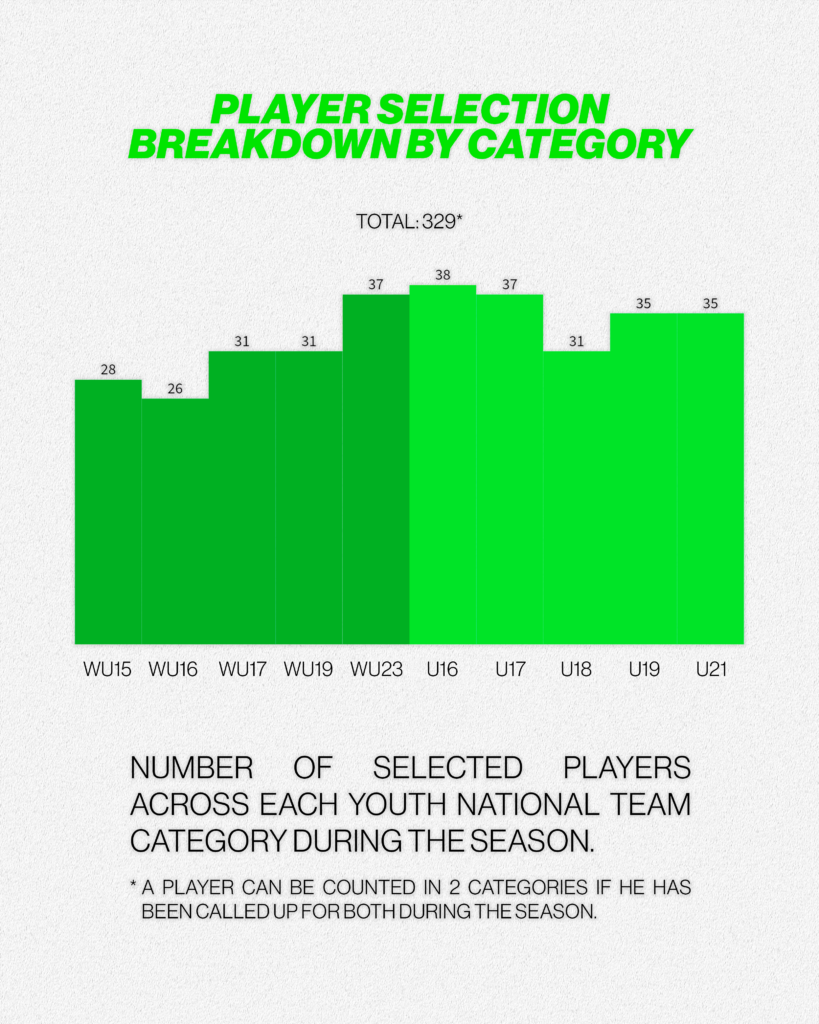
A total of 323 different players represented Belgium’s youth national teams during the 2025/26 season.
Among them, 209 were born during the first six months of the year, once again illustrating the Relative Age Effect (RAE) in Belgian football.
The Relative Age Effect refers to the overrepresentation of athletes born earlier in the selection year. Since youth competitions are organized by calendar year, players born in January, February or March are often more physically mature than those born later in the year, which can influence talent identification and selection processes. The phenomenon has been extensively studied in football and remains visible at virtually every level of the game.
The second chart presents the average number of different players selected by each youth national team over the course of the 2025/26 season. While an international squad typically consists of around 20 to 23 players during a given international window, changes due to injuries, form, availability, or coaching decisions mean that considerably more players are called up throughout the year.
Across all categories, Belgium’s youth national teams selected an average of 32.9 different players during the season. The average was slightly higher for the male teams (35.2) than for the female teams (30.6), reflecting the natural turnover that occurs across multiple international breaks.
Which Clubs Produce Belgium’s International Talent?
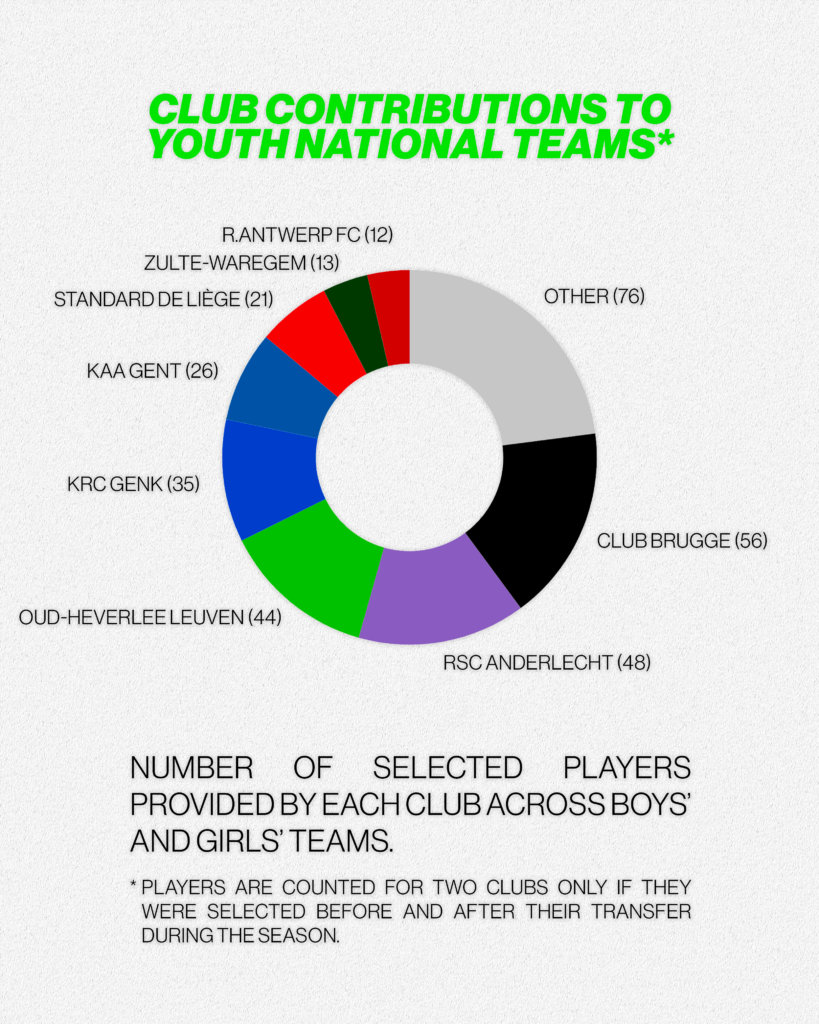
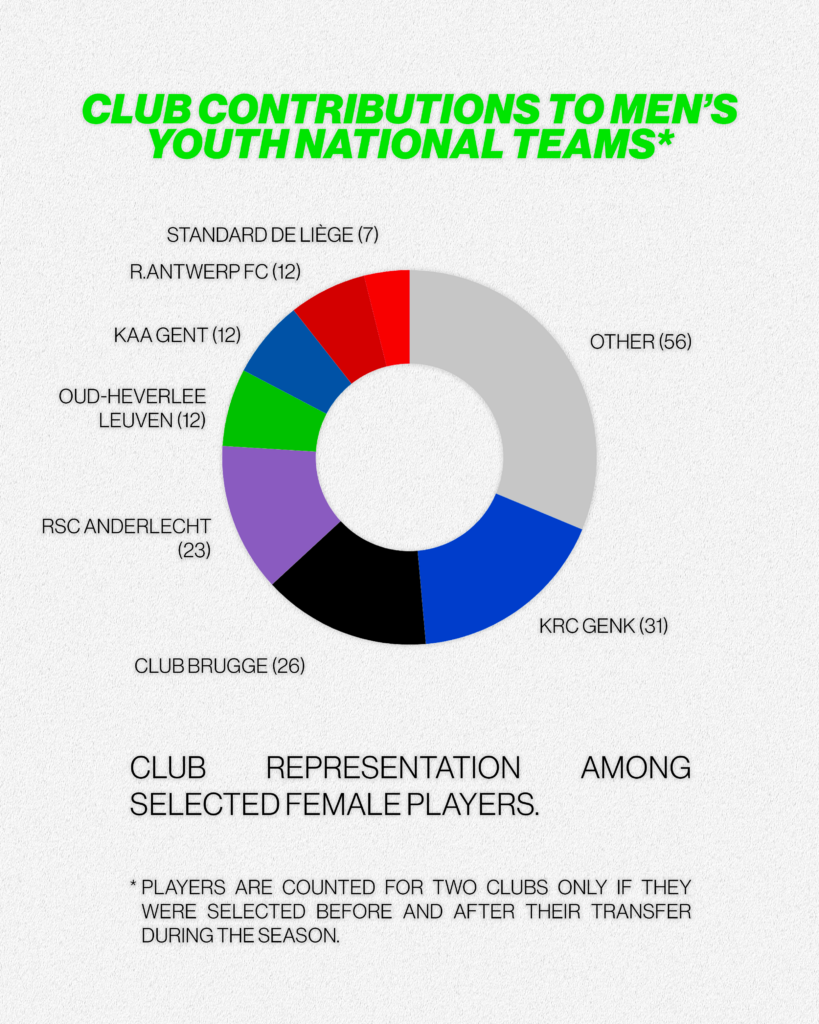
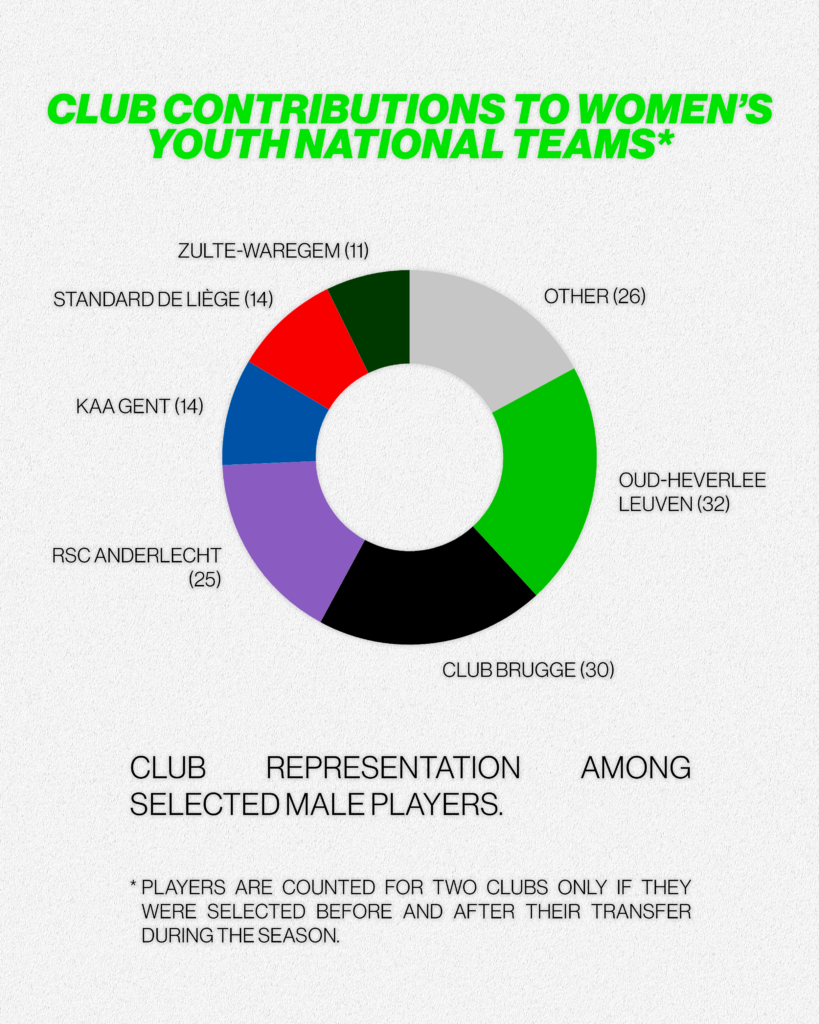
Club Brugge contributed the highest number of youth internationals during the 2025/26 season, with 56 selected players across both boys’ and girls’ teams. RSC Anderlecht finished second with 48, while Oud-Heverlee Leuven rounded out the top three with 44.
Club Brugge‘s position at the top is hardly surprising. The recent UEFA Youth League finalists continue to set the benchmark for youth development in Belgium. Earlier this year, Club NXT was named the country’s best academy for the third consecutive season after achieving an impressive score of 96.9% in the Pro League‘s annual youth licensing assessment.
Year after year, Club Brugge produces players capable of competing at international level. The club ranked second in terms of contributions to both the boys’ and girls’ national teams, further underlining the quality and consistency of its academy.
RSC Anderlecht‘s presence near the top of the rankings is equally unsurprising. Neerpede remains one of the most respected academies in European football and continues to develop talented players across every age group.
While the number of Anderlecht players selected can vary from one generation to another, the club is represented in every national team category and consistently provides a significant number of internationals each season. Few academies in Belgium can match that level of continuity.
Oud-Heverlee Leuven occupies third place overall and has established itself as the leading contributor to Belgium’s female youth national teams. The club enjoyed another outstanding campaign, winning the Belgian Super League for a second consecutive season and making history by reaching the knockout stages of the UEFA Women’s Champions League.
OHL‘s investment in women’s football continues to bear fruit, with several former academy players progressing to the senior national team in recent years, including Aurélie Reynders.
Finally, KRC Genk deserves special recognition. The Limburg club remains the leading supplier of players to Belgium’s boys’ national teams and regularly provides key members of each squad during international windows.
Genk‘s academy has long been synonymous with elite talent production, with players such as Bilal El Khannouss among its recent success stories. Their dominance at youth level is equally impressive: last season, Genk won the U18 Elite Championship for the third consecutive year, securing another place in the UEFA Youth League via the Champions Path.
Genk‘s influence can be felt across multiple generations. At almost every international break, players developed in Genk‘s academy play an important role for Belgium’s boys’ national teams.
Conclusion
Looking back at the numbers, the 2025/26 season offered further proof of the strength of Belgian youth football.
From an U17 EURO final to the continued excellence of academies such as Club Brugge, Anderlecht, Genk and Oud-Heverlee Leuven, Belgium’s development system continues to produce players capable of competing at the highest level.
The statistics presented here only tell part of the story, but they reinforce a simple idea: Belgian youth football remains one of the country’s greatest strengths, and the next generation is already preparing to make its mark.